

Evidence Week 2020
The UK Geoenergy Observatories team took part in Evidence Week 2020 to talk to parliamentarians about the essential role of geoenergy in the energy mix to meet net zero.
14/12/2020

This year, perhaps more than ever, we have seen how important it is for robust scientific evidence to be available to decision-makers. Every day, Members of Parliament need to ask searching questions of new sources of data, as well as considering complex interactions between variables and trade-offs. Evidence Week, organised by the charity Sense about Science, provides an opportunity for researchers to speak directly with MPs, peers and parliamentary staff; to explore important issues and share evidence.
The UK Geoenergy Observatories, built and operated by BGS on behalf of UKRI/NERC are research facilities enabling the gathering of critical evidence on the feasibility and environmental impact of a range of net zero and low carbon technologies including shallow geothermal energy, heat storage, hydrogen storage, carbon capture and storage, and storage solutions for wind, solar and tidal energy. They produce publicly available data capable of providing independent evidence to better inform decisions relating to innovative energy technologies policy, regulatory practice and business operations in these areas.
The UK Geoenergy Observatories team took part in Evidence Week 2020 to talk to parliamentarians about the essential role of geoenergy in the energy mix to meet net zero, and to emphasise the need for continued geoenergy research to build the body of knowledge and understanding required to make geoenergy a success.
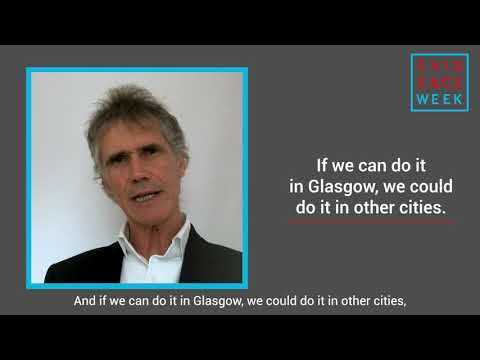

Data from underground: The UK is building two underground observatories. Their unique approach with accessible open data makes it possible to review options for zero and low carbon technologies. Source: Sense about Science
Evidence Week 2020, was held in November on a bespoke online platform, instead of being held in its usual location, the Upper Waiting Hall in the House of Commons. This gave us the unique opportunity to have one-on-one virtual meetings with MPs, Peers, and parliamentary staff. All of the people we spoke to had a keen interest in our work and recognised the importance of rapidly increasing our knowledge of the feasibility and impact of geoenergy technologies in order to be able to embed them in our energy infrastructure.
We discussed topics such as the ability of geothermal energy to counterbalance the intermittent availability of other renewable energy sources, the potential of mine water and aquifer geothermal in many of our industrial centres and the benefits the UK Geoenergy Observatories offer to industry. We also had the opportunity to discuss our shared interest in supporting young people to be involved in action towards a sustainable future. These conversations have led on to further conversations and action, which underlines a key principle of the UK Geoenergy Observatories – to be open and accessible and to inform future best practice.

Eilidh Henderson
Head of engagement
Relative topics
Related news

UK Critical Minerals Intelligence Centre makes recommendations for the next UK criticality assessment
01/07/2026
CMIC has outlined the enhancements made to the next assessment update to ensure it is better tailored to the structure of the UK economy.

From archive to discovery: historical mineral reports support gold exploration in Scotland
25/06/2026
Digitised geological records show potential to unlock untapped mineral resources in Ardlochan, Argyllshire.

UK and Philippines scientists investigate natural hydrogen generation processes at atomic scale
22/06/2026
BGS researchers were granted access to use the Diamond Light Source facility in order to study hydrogen in light brighter than the sun.

Shortage of end-of-life materials presents challenge to UK critical minerals security
17/06/2026
A new report by the UK Critical Minerals Intelligence Centre reveals insufficient end-of-life material stocks present a supply risk over the coming decade, but offer significant long-term potential to meet critical mineral demand through recycling.

UK geothermal catalogue receives update
16/06/2026
BGS releases the second digital version of the UK geothermal catalogue of subsurface temperature and rock thermal conductivity measurements and heat flow calculations.

Scientists make new discovery in the history of the Giant’s Causeway
15/06/2026
New research is changing our scientific understanding of the formation of one of the UK’s most iconic landmarks and has revealed that Northern Ireland’s volcanic past occurred over a much shorter period than previously thought.

Latest research emphasises climate-related subsidence risk to millions of British homes
11/06/2026
New data from BGS highlights the projected future impact of warmer, drier summers and underlines the need for mitigation measures in susceptible regions.

Ukraine and the UK strengthen their commitment to geological cooperation
10/06/2026
A new Memorandum of Understanding reaffirms the UK’s support of Ukraine’s ambitions to develop its critical mineral resources, paving the way for collaboration through capacity-building programmes.

Newly released core could hold clues on potential mineral prospectivity in Perthshire
05/06/2026
A comprehensive collection of geological samples from the vicinity of a former mine in Scotland is now available to scientists for further research.

Latest data on world mineral production now available
25/05/2026
BGS has released the updated statistics on the global production of over 70 commodities between 2020 and 2024.

International science consortium to survey the health, economic value and social importance of Lake VictoriaÂ
22/05/2026
The project will replicate the 1927 survey to assess changes in the lake’s health, economic value and social importance.

New geological maps of Berwick-upon-Tweed to help future-proof natural water supply
20/05/2026
Scientists have mapped the geology under the town to better understand the groundwater system to inform decisions around abstraction.